
Welcome to Exdia Express for October – keeping you informed with friendly updates from our team to yours.
In this Issue:
> Team Faces: Meet Regina
> Client Share: Thank you Ray
> ICB eBrief:
Credit Card Surcharge Ban from 1st October
Cyber Wardens Training
A Resource for Small Business Owners
And… ATO Lodgement Dates
We trust you’ll enjoy these updates, and we look forward to staying connected!
Team Faces: Meet Regina

Regina
Bookkeeping Specialist
Regina enjoys a variety of different tasks, and really loves getting to know our clients and learning about them. She finds the flexibility of our work environment very helpful in maintaining a healthy life-work balance. Regina treats the team like a second family. What she likes the most at Exdia is the healthy environment and the opportunity to grow as an individual. Regina particularly enjoys the general bookkeeping and account reconciliation aspects of her role. After work, you can find her taking care of and playing with her kids. She also enjoys watching videos about financial literacy, good housekeeping, and health tips.
What do you enjoy most about working with our clients?
I enjoy the sincere appreciation I receive from our clients. A heartfelt “thanks” goes a long way toward improving my attitude and productivity.
What’s a simple tip you use to stay productive?
I take regular breaks to stay productive. Short breaks help me regain focus and avoid burnout.
What’s your favourite coffee or snack?
My favourite snacks are almond nut, black chocolate and iced americano.
Thank you Regina for being such an amazing part of our Exdia team!
Client Share: Thank You Ray
We are so grateful for our wonderful clients, and it’s always a pleasure to receive feedback like these thoughtful comments from Ray:
Thank you, Ray, for sharing your experience. We truly value the opportunity we’ve had to work together!
And now in the following section we are delighted to share the latest eBrief from the Institute of Certified Bookkeepers with this month’s topics and content.

Credit Card Surcharge Ban from 1st October
From 1st October 2026, businesses will no longer be able to add surcharges to payments made using EFTPOS, Mastercard, Visa or American Express.
Small businesses that currently pass card processing costs on to customers may need to review payment systems, pricing, invoices, and customer information before the new rules take effect.
This is a good opportunity to raise the change with your Bookkeeper and identify where card surcharges currently appear across the business.
What Is Changing?
Businesses can continue applying card surcharges until 30th September 2026. From 1st October, card surcharges on EFTPOS, Mastercard, Visa and American Express payments will no longer be permitted.
Weekend, public holiday and other non-payment surcharges can still apply.
Businesses must clearly disclose these before the customer books, orders, or makes a purchase.
For example, a business may state that a 10% public holiday surcharge applies. From 1st October, it cannot add an additional fee simply because the customer chooses to pay with an affected card.
Businesses can also offer discounts for particular payment methods, such as cash or PayID, as long as customers can clearly understand which payment methods qualify and how much they will save.
What Should Businesses Review?
Businesses that currently apply card surcharges should start by identifying everywhere those charges are built into their systems or communicated to customers.
This may include:
• EFTPOS terminals and point-of-sale systems.
• Accounting and invoicing software.
• Online stores and payment platforms.
• Booking systems.
• Websites and online pricing.
• Menus, price lists and signage.
• Invoice templates and other customer communications.
• Standard terms and conditions.
Merchant service providers may contact businesses about changes required to terminals, online payment systems or account settings. Businesses should follow legitimate instructions from their provider and contact them directly if they are unsure what needs to change.
It is also worth checking junk or spam folders for communications that may already have been sent.
As with any change involving financial systems, businesses should be alert to scams. Unexpected links should not be used to provide banking or account details. If there is any doubt about a message, contact the provider using details from its official website or app.
Understanding The Cost of Taking Payments
Removing card surcharges does not remove the cost to the business of accepting those payments.
Businesses should understand their merchant fees, transaction volumes and other payment-related costs so they can assess what the change means for their overall costs.
Some businesses may decide to absorb these costs, while others may review their broader pricing. It may also be a useful time to compare merchant service providers and understand whether the current payment arrangement still suits the business.
FAQs
Can I still charge a surcharge?
Weekend, public holiday and other non-payment surcharges can still apply, provided they are clearly disclosed before the customer books, orders or makes a purchase. From 1st October, businesses can no longer add a surcharge because a customer pays using EFTPOS, Mastercard, Visa, or American Express.
Do I need to change my prices?
Not necessarily. Every business is different. Some may choose to absorb card payment costs as part of their operating expenses, while others may review their broader pricing. If prices change, customers should clearly understand what they will pay before making a purchase, and businesses must not mislead customers about the reason for a price increase.
Can I offer a discount for cash or PayID?
Yes. Businesses can offer discounts for particular payment methods, such as cash or PayID. Clearly communicate the discount before the customer buys, including which payment methods qualify and how much they will save.
What if card surcharges are still showing on my systems or signs?
Remove references to card surcharges from relevant payment systems and customer information. This may include EFTPOS and point-of-sale systems, invoicing software, websites, menus, booking systems, invoices and signage.
Do I need to contact my merchant service provider?
If you are unsure whether changes are required, contact your merchant service provider. They can advise whether terminals, online payment systems or payment settings need to be updated. Businesses should also check any communications already received from their provider and verify unexpected messages before following links or providing account information.
What should I check on 1st October?
Check payment, point-of-sale and invoicing systems to make sure card surcharges have been removed and are no longer being automatically applied.
For practical guidance and resources to help your business prepare, visit: Card surcharging ban | ASBFEO.
Cyber Wardens Training

Practical Cyber Support
Cybersecurity remains a key risk for small businesses, and Cyber Wardens provides free, practical training and resources to help small business owners and their teams strengthen everyday cyber awareness.
Delivered by the Council of Small Business Organisations Australia (COSBOA), the program offers short, accessible courses and practical guidance for small business owners and employees.
Cyber Wardens is free for all small businesses, making it a useful resource if you know cybersecurity is important but are not sure what practical steps to take or where to find guidance written for small business.
You can complete the Cyber Wardens training and use this link as a practical first step: Simplified Cyber Security for Australian Small Business
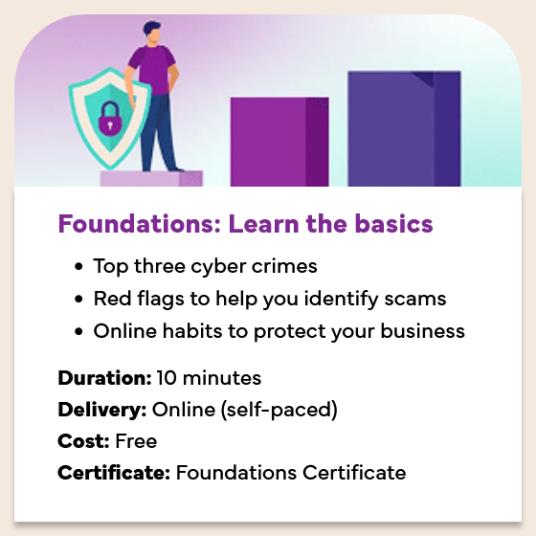
Cybersecurity Made Practical
Cyber Wardens was designed specifically for small business owners and employees, with short, self-paced courses that focus on practical actions rather than technical cybersecurity knowledge. The training currently includes:
• Cyber Wardens Foundations: A 10-minute introduction covering common cybercrimes, scam red flags and online habits that can help protect a business.
• Level 1 – Take Action: A 40- to 60-minute course covering practical cybersecurity measures, protecting the business and building cyber awareness across a team.
• Level 2 – AI Safety: A 20- to 30-minute course covering the
safe use of artificial intelligence in business, recognising AI-generated scams and measures that can help prevent fraud.
You can also access guides, articles, videos, real-life cyber stories and information about current cyber threats and scams in the Cyber Wardens Resources Hub.
A Resource for Small Business Owners
For small business owners, knowing where to start with cybersecurity can be difficult, particularly without dedicated IT support. Cyber Wardens is designed specifically with small business in mind, providing straightforward training and practical guidance that can be applied to everyday business operations.
The resources can help business owners and their teams better understand how to protect business information, recognise scams and cyber threats, and build safer online practices. With the training remaining freely available, it is also an accessible way for small businesses to strengthen their cyber awareness without needing technical expertise. For more information, see: Simplified Cyber Security for Australian Small Business.
ATO Lodgement Dates
These dates are from the ATO website and do not account for possible extensions.
You remain responsible for ensuring that the necessary information is with us in time.
See ATO Due dates by month to check monthly lodgment and payment dates.
BAS/IAS Monthly Lodgements Final dates for lodgements and payments:
September Activity Statement 21 October 2026
October Activity Statement 21 November 2026
BAS Quarterly Lodgements Final dates for lodgements and payments:
1st Quarter 2027 Financial Year: September Quarter 2026 (incl. PAYGI) 28 October, 2026
2nd Quarter 2027 Financial Year: December Quarter 2026 (incl. PAYGI) 28 February, 2027
When a due date falls on a Saturday, Sunday or Public Holiday*, you can lodge or pay on the next business day.
*A day that is a public holiday for the whole of any state or territory in Australia.
From 1st July 2026, Payday Super applies.
Superannuation contributions must be received by the employee’s super fund within seven calendar days of payday.
If a payment is made late, additional obligations and charges may apply.
Disclaimer: All or any advice contained in this newsletter is of a general nature only and may not apply to your individual business circumstances For specific advice relating to your specific situation, please contact your accountant or contact me for further discussion.
The Institute of Certified Bookkeepers Tel: 1300 856 181 Email: admin@icb.org.au
This newsletter is produced by the Institute of Certified Bookkeepers and distributed by members.